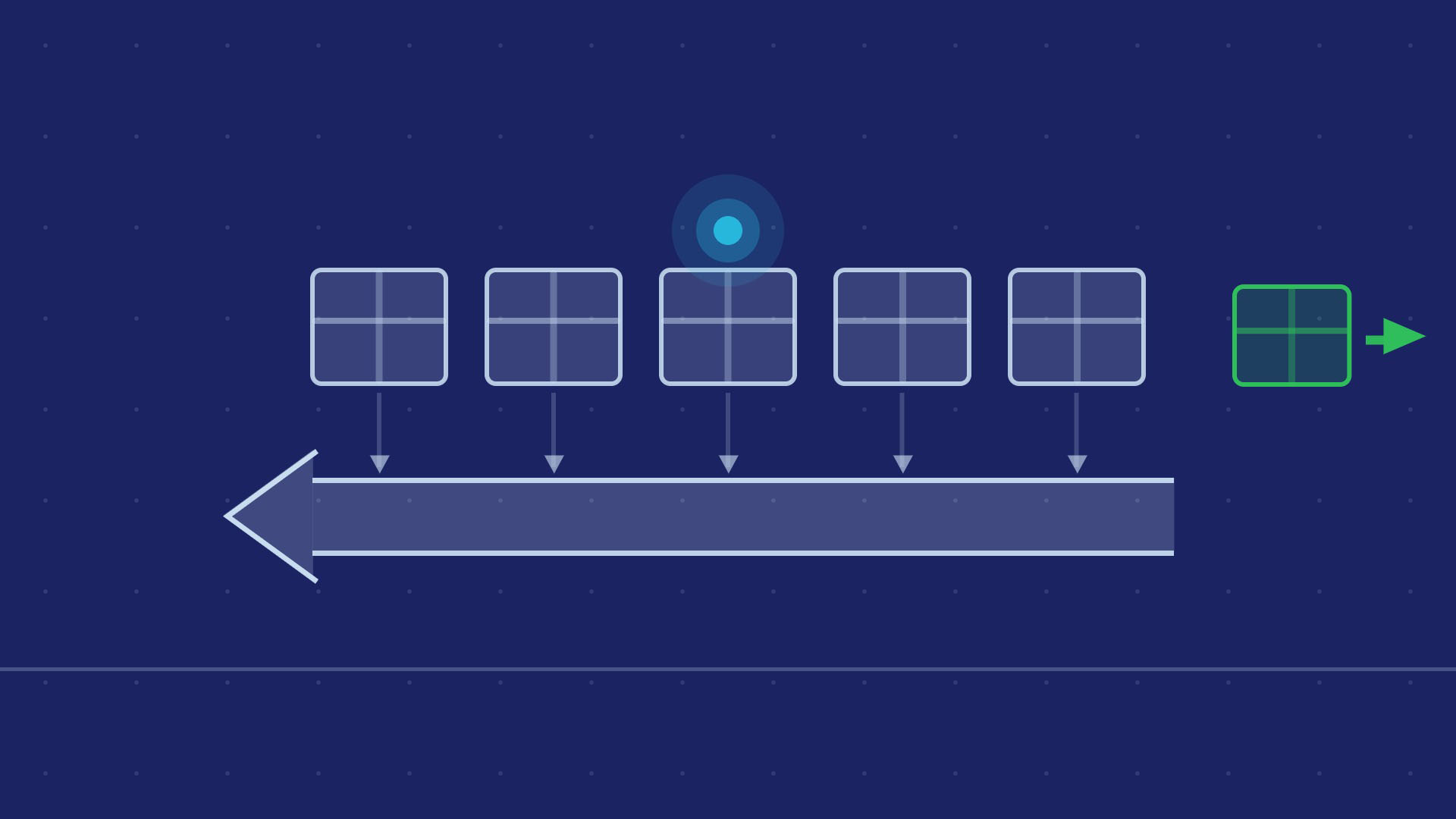
Ask a Shopify automotive parts merchant what drives their returns and the honest answer is almost never shipping damage or buyer's remorse. The part did not fit the vehicle. That has always been true. What is new is that AI models are quietly making it worse, because the fitment data you spent years building is not the data an agent reads when it decides whether your rotor fits a 2023 F-150.

Returns are a fitment problem wearing a logistics costume
Most parts merchants attack returns as a warehouse problem. Better packaging, cheaper return labels, a restocking fee, a tighter RMA window. Those are all real levers, and they all treat the symptom. The order was wrong before it was ever picked.
A fitment return starts at the moment a buyer, or an agent acting for a buyer, decides your part matches their vehicle. If that decision is made on incomplete information, no amount of reverse logistics gets the margin back. You are paying twice: once to ship it out, once to bring it home, plus the labor to inspect and restock it.
What an AI agent actually reads when it decides your part fits
This is the part that surprises people. When a model evaluates whether your rotor fits that truck, it is not reading your fitment metafields. It is making a guess from your product description.
Two Shopify realities explain why. First, Catalog Mapping lets you source from product attributes, metafields, or metaobject references, but it routes all of that into exactly three destination fields: title, description, and category. Three. Not a fitment object, not a structured vehicle table. Second, the agent-facing Catalog API exposes no metafields directly. It syndicates title, description, options, images, price, and availability.
So your ACES and PIES data, your beautifully normalized year, make, and model metaobjects, your year, make, model widget that works perfectly for a human browsing your site: none of it reaches the model unless you deliberately map it into those three fields.
What you already have              What the agent actually receives
--------------------------------  --------------------------------
custom.fitment_year_start: 2015   title
custom.fitment_year_end:   2020   description
custom.fitment_make:       Ford   category
custom.fitment_model:      F-150  images, price, availability
metaobject: vehicle_application
year/make/model widget (theme JS)  metafields: not exposed
The widget is a front-end experience. The agent never loads your theme, never fires your JavaScript, and never clicks a dropdown. It reads text.
GEO widens the top of the funnel your fitment data never qualified
Generative engine optimization is working. That is the problem. AI search is sending parts merchants buyers who never passed through a year, make, model gate. In a traditional session, the buyer selects their vehicle and your catalog filters itself. In an agent session, the buyer asks a question in plain language and a model answers it from whatever text it can see.
Someone asks, will this fit my 2023 F-150. If the model returns the wrong product, that order is destined to come back. And it is guessing. We wrote about the upside of this shift in Fitment Data Is Your AEO Strategy for Auto Parts. This is the downside of the same coin: better AI visibility on thin fitment content is a returns machine.
Run the 90 day fitment returns audit
Before you spend another dollar on return logistics, spend twenty minutes on this. It costs nothing and it will tell you how much of your return rate is really a data problem.
- Pull your last 90 days of returns and filter to the fitment related reasons: wrong part, does not fit, incompatible, ordered wrong vehicle.
- Rank the SKUs by return count, then take the top 25.
- For each one, open the product and copy only the description body. Not the metafields. Not the specs tab your theme renders from a metaobject. Not the year, make, model widget. Just the text.
- Paste that text alone into an AI model and ask it the exact question your buyer asks: will this fit a 2023 F-150.
- Log whether the model answers confidently, hedges, or invents a fitment claim.
What you are looking for
You are looking for the overlap between the SKUs that generate returns and the SKUs whose descriptions carry no vehicle information. In our experience that overlap is uncomfortably tight. The parts that come back are usually the parts where fitment detail never made it into the description in the first place.
Two SKUs that both have perfect metafields can behave completely differently in AI search, because only one of them has fitment in the text an agent can see. That is the gap the audit exposes.
What fitment content an agent can parse looks like
The goal is not to dump a fitment table into your description. That reads badly for humans and models both. The goal is language that a person and a model can each parse without ambiguity: explicit years, explicit make and model, explicit trim and engine and position qualifiers, and an explicit statement of what it does not fit.
BEFORE
------
Heavy duty front brake rotor. Precision machined, corrosion
resistant coating. Direct replacement. Sold individually.

AFTER
-----
Front brake rotor for 2015 to 2020 Ford F-150, 4WD models with
the 6-lug hub. Fits XL, XLT, Lariat, King Ranch, and Platinum
trims with the 3.5L EcoBoost, 2.7L EcoBoost, or 5.0L V8 engine.
Does not fit the 2015 to 2020 F-150 Raptor or 2WD 5-lug
configurations. Sold individually; two required per axle.
Note what the good version does. It names the vehicle in full, it states the range rather than implying it, it calls out the exclusion, and it uses the phrasing a buyer would actually type. A model reading that text can answer the F-150 question without guessing. A model reading the first version has to invent something.
Three Shopify settings that quietly undo your fitment work
Even merchants who do the mapping work get tripped up here. Check all three before you conclude your content is the problem.
Unlisted products are invisible to AI channels. Setting a product to unlisted hides it from agentic storefronts, and it also removes it from search engines and your own store search. If a high-return SKU is unlisted, an agent is answering fitment questions about it from your other products, or from a competitor's.
Catalog Mapping changes process on a delay. Shopify does not apply mapping updates instantly. If you rewrite descriptions on Monday and audit agent answers on Tuesday, you may be grading yesterday's catalog. Build a lag window into any before and after test.
Agentic storefronts are still early access. Not every store has the surface yet, which means the mapping UI you read about may not be available in your admin. That is not a reason to wait. The description text is the durable asset, and it works for classic SEO, for AI search and MCP, and for the Catalog API the moment you get access.
Doing this by hand does not scale
Rewriting fitment content is straightforward for ten SKUs. It is a quarter-long project for three thousand. The data usually already exists in raw metafields, it is just in a shape no human wants to read and no model was given.
That is why we are building a Shopify app at Ambaum. It reads your raw fitment metafields, uses AI to rewrite them into clean, human readable fitment content, and lets you review and approve each product description with one click. You keep the structured data you already have. The app makes a version of it that agents can actually read.
Where to start
Run the 90 day audit first. If the SKUs driving your returns turn out to be the ones with thin descriptions, you have found a returns lever that costs content work instead of freight. If you want help sizing it, our team runs an Agentic Commerce Audit that looks at exactly this: what agents can see in your catalog, where the gaps are, and what it is costing you. If you want early access to the fitment app, or you just want to know how much of your return rate is really a fitment problem, reach out.
Read the full transcript
What actually drives returns for Shopify automotive parts merchants? Almost always the same thing. The part did not fit the vehicle. And AI models are making this worse. Generative engine optimization sends you buyers your fitment data never qualified. Someone asks, will this fit my 2023 F-150? Guess wrong, and you just booked a return.
Here is the uncomfortable part. When an AI model decides whether your rotor fits that truck, it is not reading your fitment metafields. It is making a guess from your product description. Your fitment metafields do not reach the models unless you map them. Shopify Catalog Mapping routes your custom data into exactly three fields: title, description, and category. And the agent-facing Catalog API exposes no metafields directly.
So before you spend another dollar on return logistics, run this audit. Pull your last 90 days of fitment related returns. Then read the descriptions on those SKUs the way an agent would. Not the metafields, not your year, make, model widget, just the text. Odds are the SKUs driving your returns are the ones where fitment detail never made it into the description.
The fix is to get fitment data into the fields agents actually read, in language both a human and a model can parse. That is tedious to do by hand across a few thousand SKUs. Which is why we are building a Shopify app at Ambaum. It reads your raw fitment metafields, uses AI to rewrite them into clean, human readable fitment content, and lets you review every product description with one click. Want early access, or just want to know how much of your return rate is really a fitment problem? Reach out.